 (609) 225-4890 |
  Contact Us
 Sign Up for Email
Updated: Feb. 14, 2026, 10:03 a.m. | Published: Feb. 14, 2026, 9:00 a.m
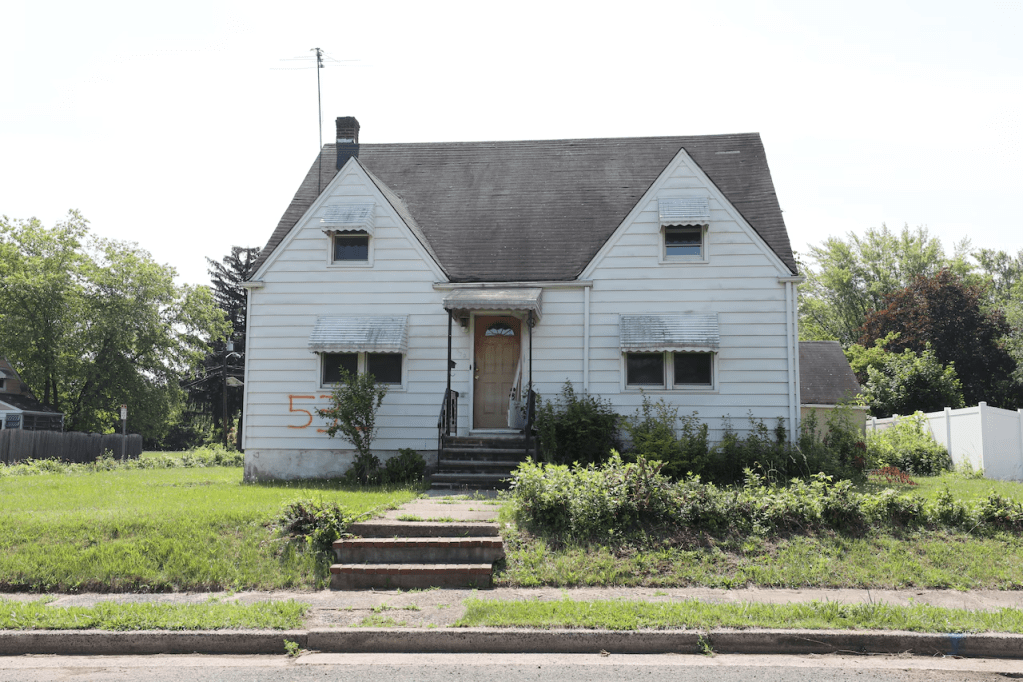
Amanda Monterroso saw the state engineers milling about her roughly 1,200-square foot house in Manville this past summer.
The 38-year-old mother assumed they were sampling the soil and taking measurements to move things along for her long-awaited home elevation — a project her family was a “primary candidate” for, according to a letter from the state last March.
The Department of Community Affairs’s Division of Disaster Recovery and Mitigation “looks forward to working with you to elevate your property,” that letter said.
It was the silver lining her family of six needed — after having to evacuate amid the remnants of Hurricane Ida in 2021, sustaining more than $50,000 in property damage from the storm and still, to this day, flinching every time the forecast calls for heavy rain.
At the start of this year, all those hopes were dashed.
What amounted to a denial letter said the elevation won’t be happening due to federal financial rules.
“We were pretty shocked,” Monterroso, who works as a billing manager for a medical practice, told NJ.com on Friday.
“All of a sudden months later, we get nothing,” she said, noting the family feels stuck after being denied for a buyout a year prior. “They said they can no longer help.”
Sixty-nine New Jersey homeowners — including seven like the Monterroso’s in Manville — will not have their homes elevated after the state found the construction would be too costly under Federal Emergency Management Agency policies, NJ.com is first to report.
Dozens of households in the Garden State were previously considered good candidates for elevations via the Mitigation Assistance Program, or MAP, funds, storm advocates said Thursday.
Homeowners in New Jersey needed $19 million to elevate, based on construction estimates.
But none of that money will be coming.
“They’re having another program pulled out from under them,” Amanda Devecka-Rinear, founding director of the New Jersey Organizing Project, which helps storm survivors, said Thursday. She said families already in financial straits only continue to feel exasperated.
MAP is state run but federally funded. At the end of January, the New Jersey DCA informed the homeowners of the news in several letters.
When asked why the applications were ostensibly denied, officials from the state and federal government pointed fingers at one another.
The state said it couldn’t apply for FEMA funding after the agency changed the formula for how much the feds are willing to spend on elevations in New Jersey and projects no longer qualified. The max to get federal support opens in a new windowwas adjusted in 2023 to help more people, including low-income families, qualify for elevation funds, but was reverted back last year.
Federal officials said, because New Jersey never technically applied, they had nothing to consider.
“FEMA did not receive a request from the state to elevate homes in Manville, a prerequisite to determining whether they are eligible for FEMA funding,” the agency told NJ.com in a statement.
FEMA “cannot speculate” on why New Jersey officials found homes ineligible, federal spokespeople said in an email.
Disaster recovery organizers in the state rolled their eyes at that notion. They said the federal policy is to blame for New Jerseyans not getting more help. Regardless, they are eager to learn how the state could step in.
The state Department of Community Affairs “understands the frustration expressed by homeowners regarding the Mitigation Assistance Program and recent correspondence affecting certain home elevation projects. We are not turning our back on these families. Other mitigation options may become available …,” Lisa Ryan, a spokeswoman with the DCA, told NJ.com.
People in the following towns received notices their elevation applications won’t proceed under the MAP program:
- Cranford (20)
- Manville (7)
- Bridgewater Township (4)
- North Plainfield (4)
- Somerville (2)
- Readington Township (1)
- Hopewell (1)
- Princeton (1)
- Little Falls (11)
- Pompton Lakes (7)
- Lincoln Park Borough (5)
- Fairfield (5)
- Rochelle Park (1)
Who’s paying for what?
It’s easy to tie a knot in your head when it comes to how federal and state governments dole out opens in a new windownatural disaster recovery funds.
The upshot in several New Jersey towns? Money to avoid or deal with flooding can opens in a new windowtake too long to arrive, not be enough once it’s offered or never arrive at all.
The latest blow in Manville has only provoked more frustration.
“It’s a travesty that all our residents had all these high hopes for property elevations and now at the last moment the government has pulled the rug out from under them and left them high and dry,” Manville Councilman Joe Lukac said on the phone Friday.
While the state has only shared seven households being denied for elevations in Manville, Lukac said more than 20 applied so it remains unclear how many will ultimately not move forward.
“We’ve seen nationally, under (Secretary of Department of Homeland Security) Kristi Noem’s leadership, FEMA doing worse by disaster survivors than it has done in the past,” Devecka-Rinear, the advocate, said.
She pointed to the opens in a new windowdeadly floods in central Texas where reporting revealed opens in a new windowa slow response by FEMA and opens in a new windowa myriad of calls from flood victims left unanswered given the agency dealing with lay-offs.
“We as a state need to push back and support folks in being better prepared for future storms. And we need an independent FEMA led by someone with disaster recovery experience who’s going to fight for these families that are currently losing this,” said Devecka-Rinear.
Manville, a small borough of 11,000 residents, opens in a new windowwas drenched with 10 inches of rain during Ida.
There, opens in a new windowa new policy that began in 2024 meant the state stopped paying to elevate homes in especially flood-prone areas. Heavy rainfall and a swelling Raritan River — both prime to worsen given man-made climate change — are frequent problems in Manville. Instead, New Jersey shifted to namely offering state-supported opens in a new window“buyouts” for people to move out of flood zones in the borough.
The FEMA elevations were still possible despite that policy, advocates said this week.
As part of the regulatory process, FEMA requires properties it elevates to fit into what it calls a “fixed construction allowance.” Following Ida — when families in Manville and elsewhere were told they may expect FEMA money to lift — engineering and design firms have assessed properties considered ideal prospects to elevate.
Across eligible properties, the average cost of construction came in 148% (or $141,937) above the FEMA allowance, New Jersey officials said in a Jan. 22 letter sent to impacted residents and obtained by NJ.com.
“We regret to inform you that Division of Disaster Recovery and Mitigation (preliminary award) is no longer able to fund the elevation of your property under the MAP Program due to the construction cost exceeding FEMA cost allowances,” the state DCA’s Disaster Recovery and Mitigation division wrote in the letter.
Under the Trump administration, community affairs officials said, FEMA has updated its cost allowance for elevation projects.
“FEMA’s policies and cost allowances have evolved since (the state) applied for this funding before 2025,” DCA officials added.
FEMA-funded home elevations must meet a federal benefit-cost analysis, or BCA, the state said. For instance, the FEMA Hazard Mitigation Grant Program’s pre-calculated BCA threshold is about $286,000 per home.
The state highlighted other programs residents could still apply for.
There’s no specific standard threshold for how much FEMA is willing to pay to elevate a home because it depends on the application, Devecka-Rinear shared.
Still, she said families in Manville and around New Jersey have been blindsided after getting every indication they’d receive the federal help.
For Monterroso, who grew up in Manville and bought her home in 2019, it’s hard to know where to turn now.
She struck out on a buyout, selling hasn’t been possible and now she won’t get a federally-paid home elevation.
Another hurricane season will be here soon enough.
“We’re just wondering what’s next for us,” she says.