 (609) 225-4890 |
  Contact Us
 Sign Up for Email
Scroll to see what families who are impacted by Hurricane Ida are still going through four years after the storm hit. This is why we stand up and speak out to reform our disaster recovery system. And check out Julia’s op-ed calling out Governor Murphy for a stalled recovery.”
Sharing MEmbers Stories
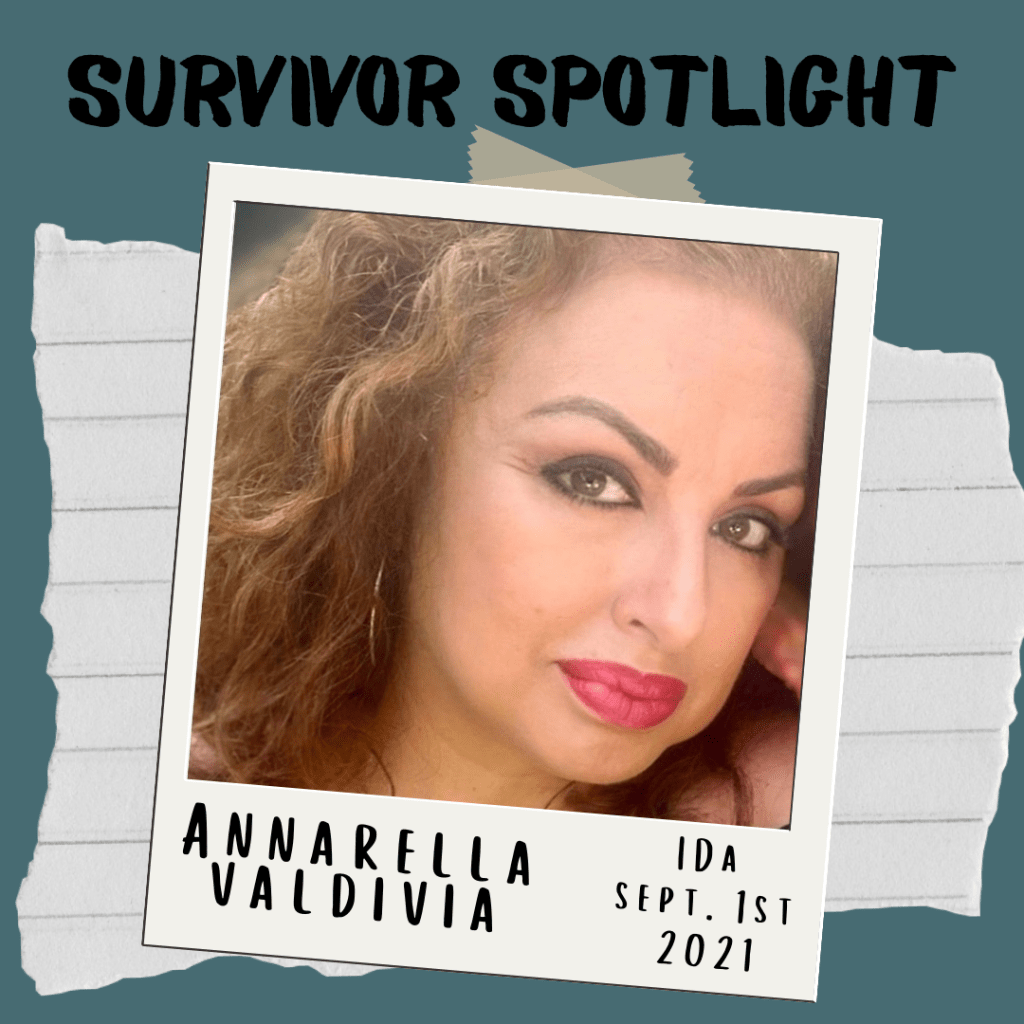
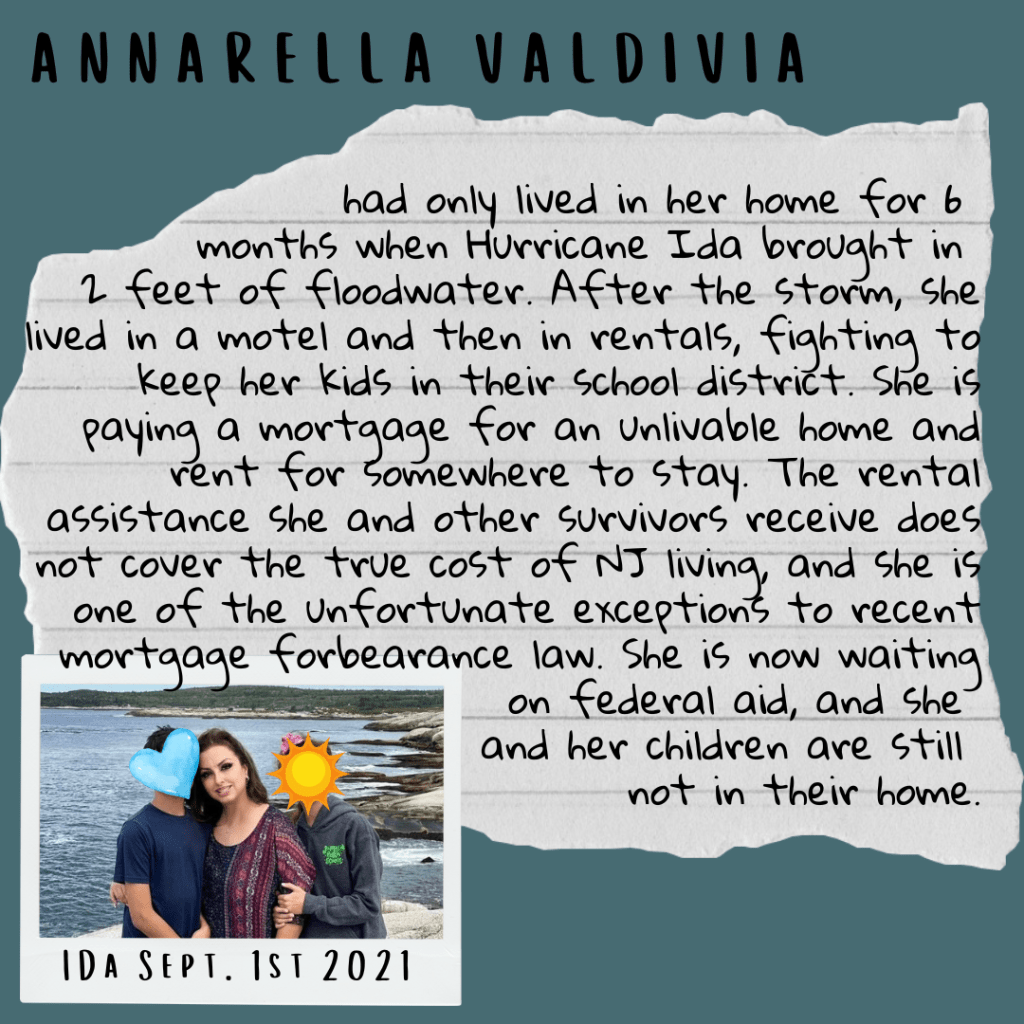
Members Jason Minott and Annarella Valdivia shared their stories on our Instagram and Facebook pages, highlighting the struggles they still face four years down the line.


Follow NJOP on Instagram here
Follow NJOP on Facebook here
Members in the press
Julia Morales-Abbud’s op-ed was featured on NJ.com.
N.J.’s ‘most abysmal’ disaster recovery program has left Ida victims in limbo for years
It’s been four years since the remnants of Hurricane Ida caused catastrophic flash flooding in New Jersey.
In the time that has passed, help for flood survivors has either come too late, or not at all. I would know — I’m one of them.
Usually, after floods like the one Ida brought upon our communities, the best option is to elevate homes out of the way of potential future flooding.
A lot of flood survivors have elevated their homes, but I have not. Neither have many people who come from similar working class families as mine.
Why? Because of a slow-motion tragedy unfolding in one flooded community – a tragedy that Gov. Phil Murphy could stop with the stroke of a pen.
The tragedy begins in Ida’s immediate aftermath. In a move that local disaster recovery expert Keith Adams called “… opens in a new window the most abysmal, criminal failure that I’ve ever seen in a disaster case management program in my entire career.”
New Jersey did not roll out case managers for Ida recovery until 16 months after the storm.
This means we did not have help applying for or navigating programs during the time we most needed it.
Usually, during declared disasters such as Ida, FEMA would make up to 18 months of rental assistance available for displaced survivors. During Superstorm Sandy, nearly 10,000 New Jerseyans received this assistance.
For Ida, however, FEMA failed to provide rental assistance to displaced families beyond a paltry two months. Many of us were stuck paying rent on top of mortgages on unlivable homes, and now we’re facing foreclosure, in debt, and behind on payments.
opens in a new windowI’m a member of the New Jersey Organizing Project, a group founded by Superstorm Sandy survivors, so the failings of the federal system are sadly no surprise. We continue to work together to ensure FEMA is more responsive to our families in future disasters. But that’s only half the problem.
The other half arrived in August 2023, when the state of New Jersey informed families in Manville that they were no longer eligible for grant funds to rebuild higher and more resilient buildings for future storms.
Instead of entering the rebuilding and mitigation program, a program people were eagerly anticipating, families found out that their options were now much more limited: try to sell their home for market value, pay for tens of thousands of dollars in repairs out of their own pockets, or take a buyout for less than their home is currently worth.
I was shocked by Murphy’s discriminatory decision to use federal grant funding meant for our low- and moderate-income families to push families out of their communities. Moving is not an option for many because of the rising cost of real estate, but self-funding repairs isn’t either – it’s not possible for working families who have already been struggling to recover.
The Blue Acres buyout process, on the other hand, has thus far failed to relocate families quickly and safely. Many NJOP members who have applied are still waiting for approval, or have received offers that are well below the current market value of our homes, making relocating afterwards difficult. opens in a new windowSome families who received buyouts ended up renting rather than buying due to this, and lost the wealth and equity they had and could build as homeowners – to say nothing of the community they lost in the process.
For many, we are right back to where we started. When I look at these members who live in Manville, they fall into two groups. Those who have money can afford to elevate and repair their homes. And, there are the hard working class who can not elevate due to the lack of funds. They will have to stay as they are and wait for the next flood.
Denying federal grant funding from the very people who this program is designed to serve is not what we stand for as a state.
New Jersey is putting us in a situation where a full and fair recovery is simply not possible. And while this policy currently applies to around 80 families in Manville, any of us could be next.
Please honor Ida’s anniversary with me by calling on Gov. Murphy to give Manville families a chance and a choice.